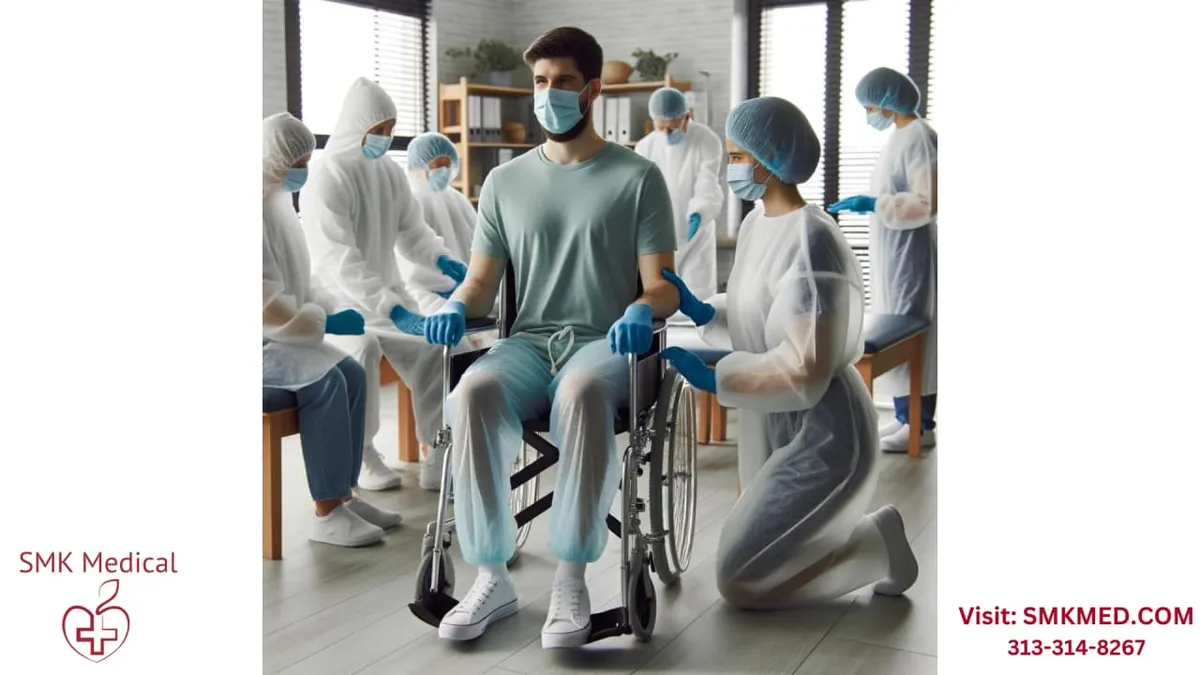
Enhanced Barrier Precautions in Nursing Homes: An Overview
Historical article: this post discusses guidance, research, or events from its original publication period. Time-specific requirements should be checked against the current primary source before operational use.
The Centers for Medicare & Medicaid Services (CMS) has released an important update for nursing homes, which is the memorandum Ref: QSO-24-08-NH. This marks a crucial development in the approach to infection prevention and control, with the introduction of Enhanced Barrier Precautions (EBP) coming into effect on April 1, 2024. This guide is designed to help long-term care (LTC) facilities understand and prepare for the implementation of these new guidelines.
Key Points of the New CMS Guidelines:
- Expansion of Enhanced Barrier Precautions (EBP): The new guidance mandates the use of gowns and gloves for high-contact resident care activities, extending this requirement to include residents with chronic wounds or indwelling medical devices, regardless of their MDRO status.
- EBP Implementation Criteria: LTC facilities are now obligated to apply EBP for residents infected or colonized with CDC-targeted MDROs and those with chronic wounds or indwelling medical devices, broadening the scope of individuals needing enhanced precautions.
- Discretionary Application of EBP: Facilities have the discretion to use EBP for residents who do not strictly meet the outlined criteria but are still considered at risk for MDRO transmission. This allows for a more personalized approach to infection control based on the unique needs of residents and facility capabilities.
- Updated Survey Procedures: In light of the new guidelines, CMS will adjust survey procedures to assess the application of EBP in nursing homes. It's crucial for LTC facilities to be prepared for increased scrutiny regarding their compliance with these updated practices.
Preparing Your Facility for Compliance:
To align with CMS's updated regulations, LTC facilities should:
- Revise Infection Control Policies: Update your infection prevention and control policies to incorporate the latest EBP guidelines, including revising training programs to emphasize the proper use of PPE during high-contact care activities.
- Enhance Staff Training and Compliance: Provide in-depth training for all healthcare personnel on the new EBP guidelines, underscoring the critical role of adherence in preventing the spread of MDROs.
- Assess Resources and Allocate Accordingly: Evaluate your facility's resources and capacity to implement the EBP expansion. Ensure there is an adequate supply of PPE and that it is readily accessible to staff.
- Implement Communication and Monitoring Strategies: Set up effective communication channels for disseminating updates on infection control policies and procedures. Establish monitoring systems to ensure compliance with EBP guidelines and proactively address any challenges.
Adopting these updated guidelines will significantly bolster infection prevention and control efforts within LTC facilities, protecting the health of residents, staff, and visitors. SMK Medical is dedicated to assisting LTC facilities through this transition. For any guidance or support in implementing these critical updates, please contact SMK Medical at 313-314-8267 or visit SMKMED.COM.